
Lab Grown Diamonds
What is a Lab Grown Diamond?
Firstly, a lab grown diamond (sometimes also referred to as man-made) is a diamond in every sense. Chemically, physically and optically they are identical to their mined counterparts. Naturally occurring diamonds are created in the intense pressure and immense heat of the Earth’s mantle around 100 miles underground. Most were formed 1-3 billion years ago at a time when our planet was far hotter than it is today. A lab grown diamond re-creates the conditions in nature that result in carbon crystallizing into a diamond. This means that, just like in nature, no two lab created diamonds are alike, each one is unique and will have variations in their colour and clarity just like you would see in a natural diamond.
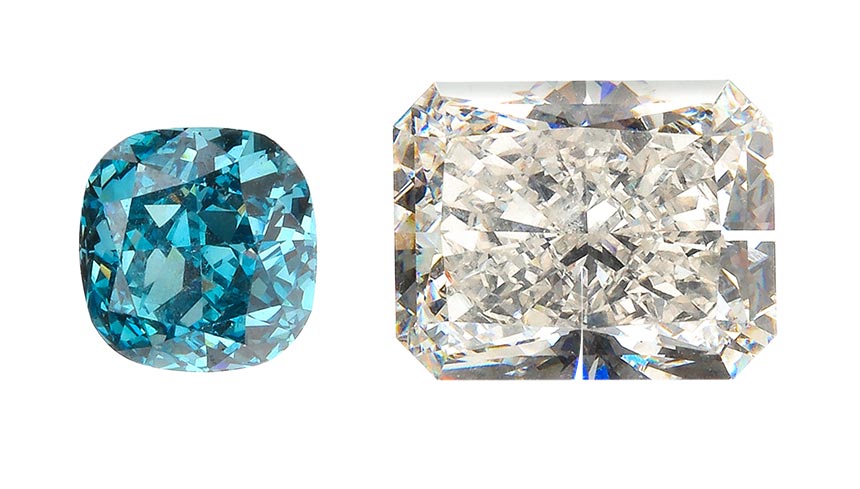
Lab grown diamonds can be grown in one of two ways.
HPHT
The first is called High Pressure-High Temperature (HPHT) and the second is Chemical Vapour Deposition (CVD). Each process is best suited for certain sizes, shapes and colours of diamonds. They’re both diamonds, they have the same chemical properties, the same physical properties. John King, Chief Quality Officer of the Gemological Institute of America (GIA) HPHT occurs within very large pressure cookers called a cubic press which can exert in excess of 70 metric tons. To grow a diamond in a cubic press, small diamond seeds are placed into the bottom of a growth cell. A layer of additional carbon, in the form of graphite, is then delicately placed on top of the diamond seeds. The growth cell is then placed into the centre of the cubic press and heated to around 1’500 degrees Celsius while being subjected to 1 million psi of pressure. At that temperature and pressure, the graphite in the growth cell is melted into a liquid and then very carefully cooled into our favourite form of carbon, a diamond crystal.
CVD
CVD growth is quite different from HPHT in two major ways. First, the diamonds are grown in a vacuum instead of under tremendous pressure. Secondly, CVD growth requires large, flat plates of diamond which will grow upwards instead of small seeds. To grow a CVD diamond, diamond plates are placed into a vacuum chamber, carefully injected with a hydrocarbon gas such as methane and use high power microwave energy to break down the atomic bonds of the hydrocarbon gas. This separates the carbon atoms from the hydrogen atoms and the resulting free carbon atoms “rain” down on the diamond plates causing the vertical upward growth unique to CVD. The growth is atom by atom, similar to the way snow collects on a table.

Browse our beautiful range of lab created diamond jewellery in store and online by clicking HERE.

Comments are closed here.